Focus Areas

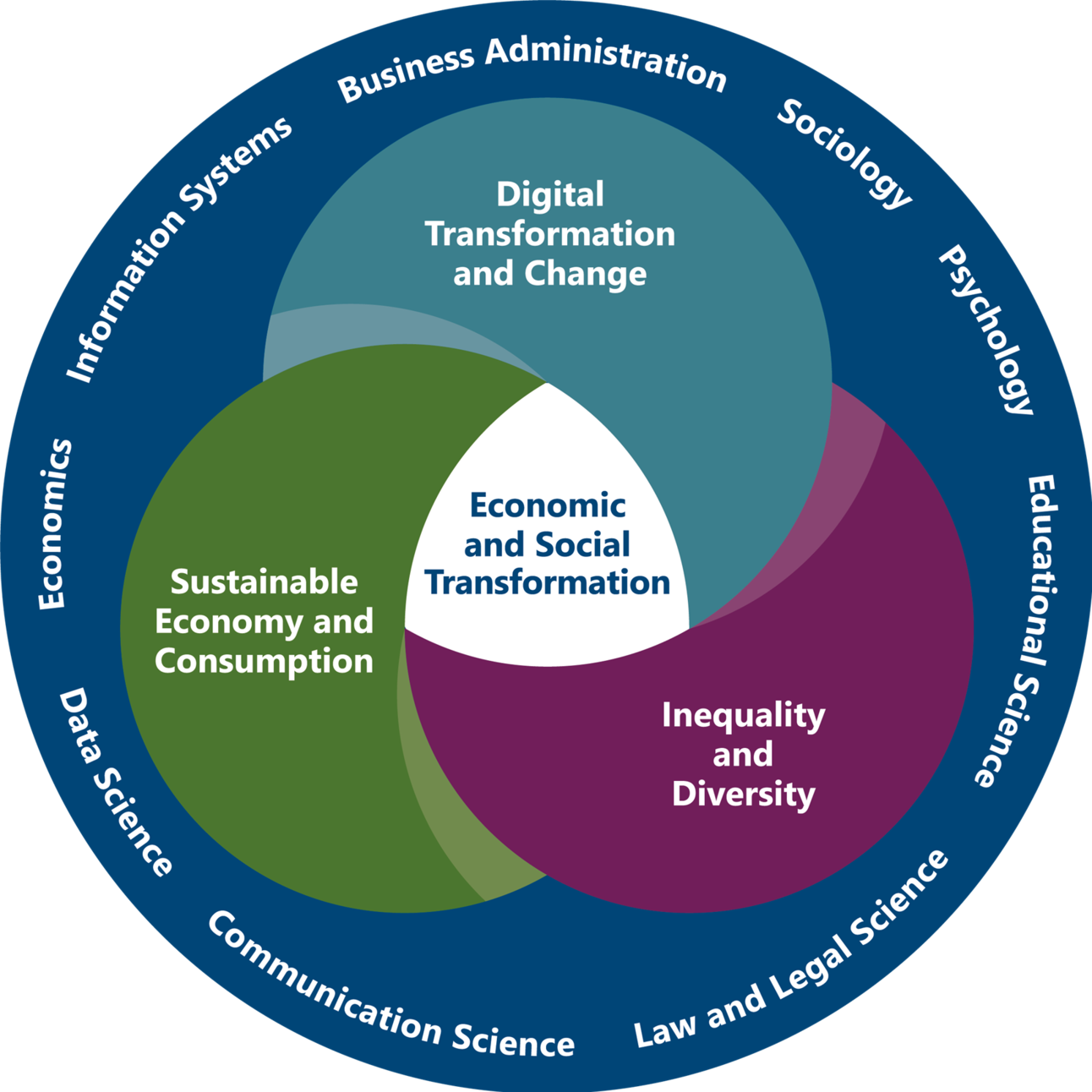
Economic and social change is at the heart of research and teaching at the Faculty of Business, Economics and Social Sciences. To develop innovative solutions to current problems and future challenges, the faculty examines the dynamic changes in the economy and society brought about by technological, environmental, and social developments.

Three Key Topics

The departments conduct collaborative, interdisciplinary research in three major, relevant areas.

  • Digital Transformation and Change
  • Sustainable Economy and Consumption
  • Inequality and Diversity

On this page, you’ll find information on these focus areas as well as related projects, publications, course offerings, and other content.

Digital Transformation and Change

What do we mean by that?

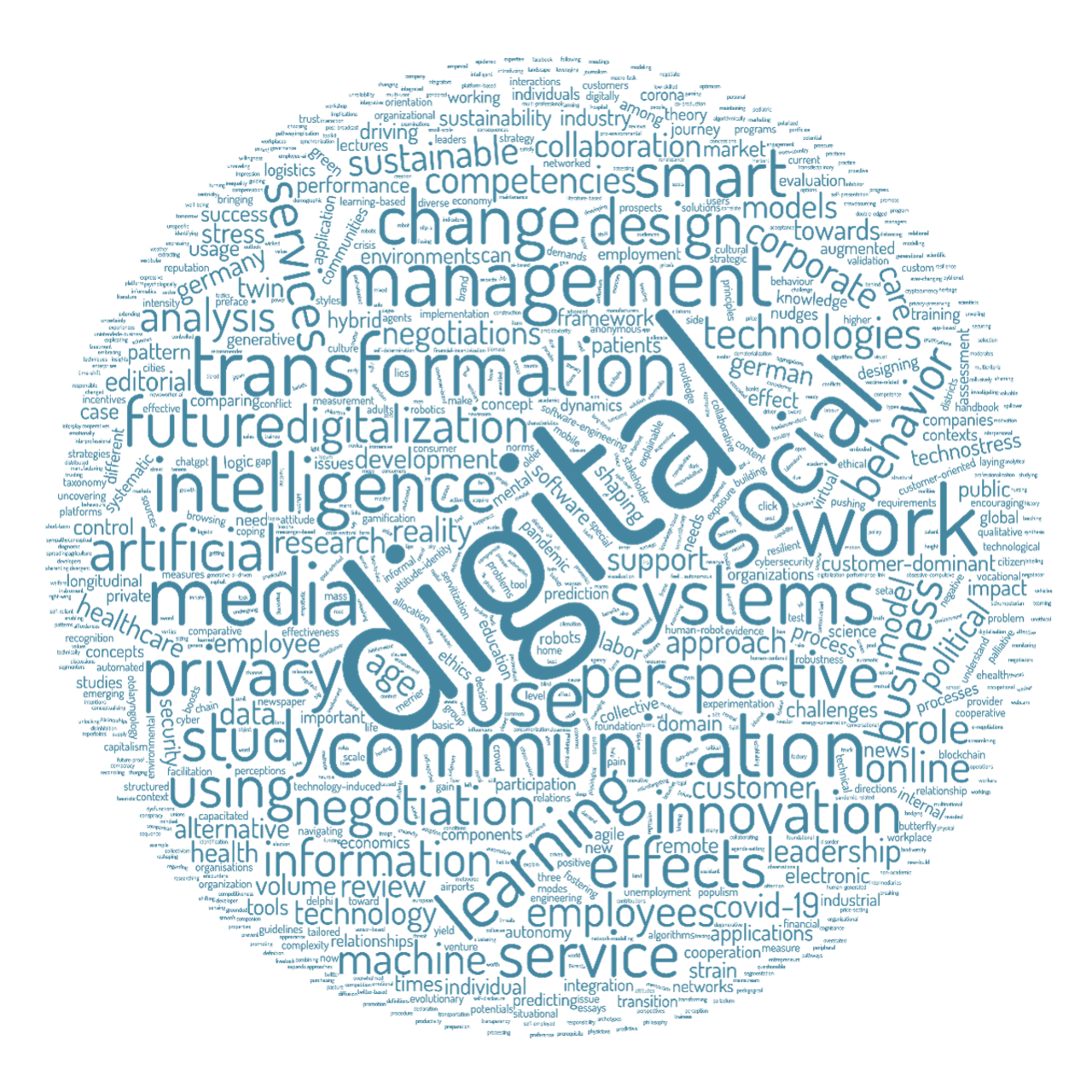
As part of the focus area “Digital Transformation and Change,” research examines how technological innovations are transforming businesses, societies, and economic systems. The research focuses on the introduction of digital technologies such as artificial intelligence, big data, cloud computing, and the Internet of Things, which fundamentally influence work processes, business models, and social interactions. The goal is to understand the challenges and opportunities presented by this transformation in order to develop strategies for successful adaptation and to promote sustainable innovation. Of particular interest are the impacts on organizations, labor markets, individuals, and social structures.

This focus area also plays a central role in teaching, as future professionals and leaders are prepared to navigate these changes and responsibly shape an increasingly digital future. Course content therefore encompasses both the theoretical, conceptual, and technical foundations of digital transformation and practical skills in working with new technologies, business models, and forms of work. In addition, the curriculum promotes interdisciplinary approaches to prepare students for the complex challenges of digital transformation and enable them to develop innovative solutions.

Digital Transformation and Change in Projects, Publications, and Course Offerings

Sustainable Economy and Consumption

What do we mean by that?

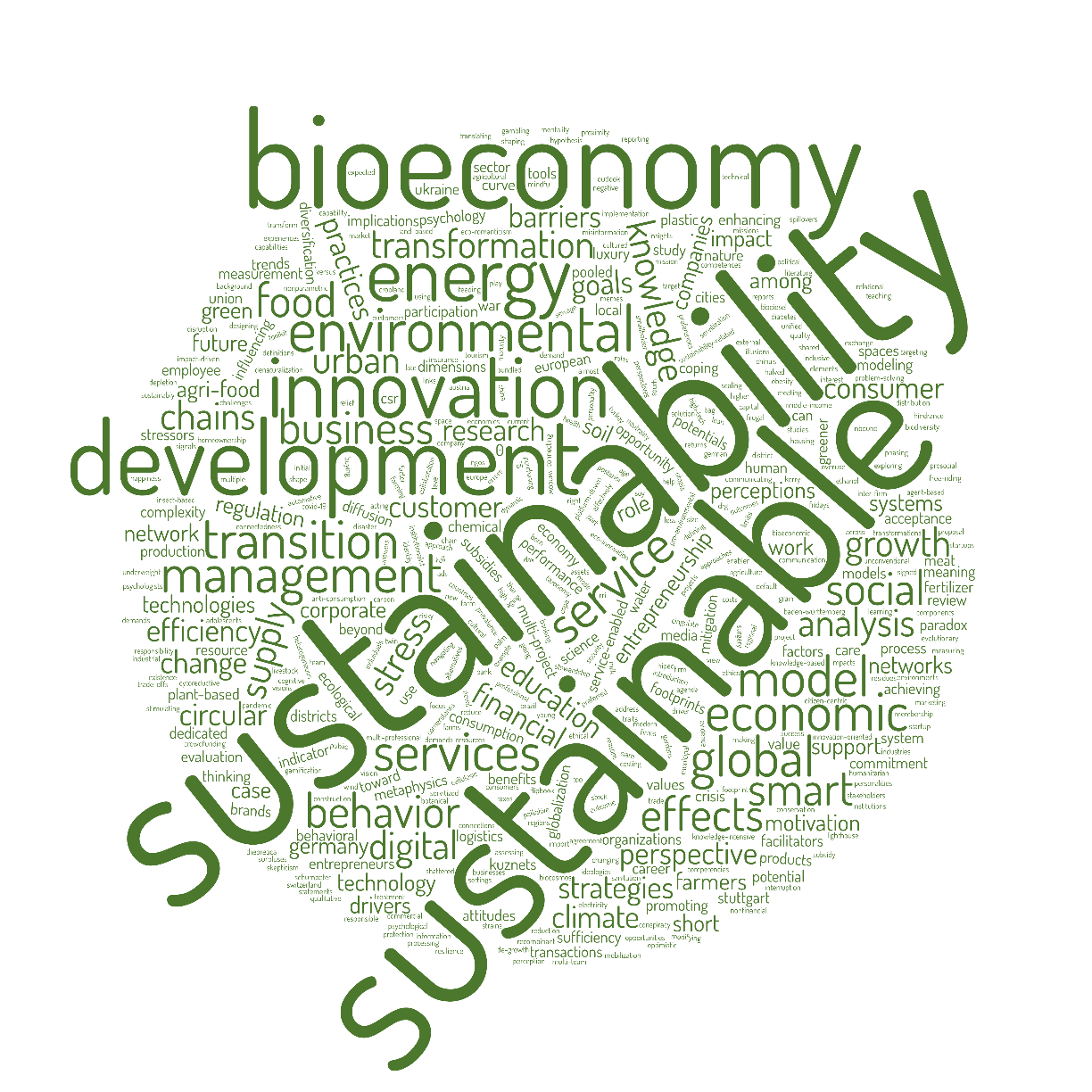
As part of the focus area “Sustainable Economy and Consumption,” research examines how economic activities and consumer behavior can be structured in a way that promotes environmental, social, and economic sustainability. The research focuses on how businesses, consumers, and policymakers - individually or collectively - can use resources efficiently, reduce emissions, and establish more equitable patterns of production and consumption. Topics such as the circular economy, responsible consumption, decent working conditions, and the impacts of climate change on the economy are analyzed. The goal is to promote sustainable business models and consumption habits that are economically viable and contribute to protecting the planet and fostering social justice.

This focus area is also highly relevant in teaching, as it raises students’ awareness of the urgency of sustainable solutions and equips them with the skills to identify, implement, and manage these solutions. Course content includes teaching about sustainable economic models, environmental management, and ethical consumption, as well as developing practical approaches for implementing these concepts across various industries. The goal is to train future decision-makers who integrate economic, environmental, and social responsibility into their thinking and actions and who can pioneer innovative ways to promote sustainability in the economy.

Sustainable Economy and Consumption in Projects, Publications, and Course Offerings

Inequality and Diversity

What do we mean by that?

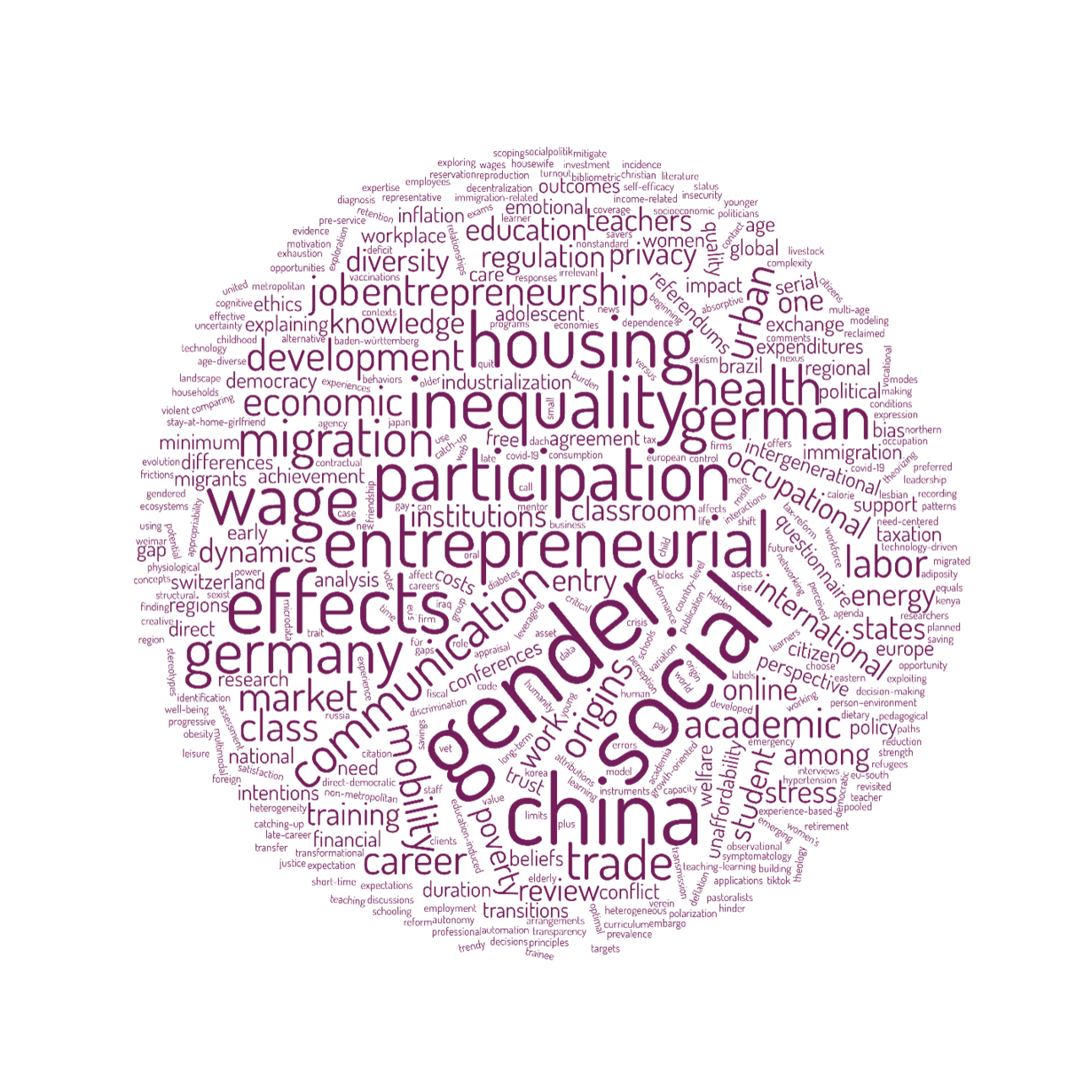
The focus area “Inequality and Diversity” addresses social, economic, and cultural inequalities, as well as the importance of and efforts to promote diversity. For example, it examines the role that the distribution of income or wealth plays in various economies and how social and demographic factors affect individual opportunities, access to education and the labor market, as well as political and social participation. The goal of this research is, on the one hand, to understand the causes and consequences of inequality and, on the other hand, to develop strategies to promote equal opportunity and inclusion.

Inequality and diversity also play an important role in teaching, as students are intended to be made aware of these issues within the context of their education in the economic and social sciences. By teaching theoretical approaches and practice-oriented methods, students are equipped with the tools to recognize the mechanisms and structures of inequality and learn how to examine ways to integrate diverse perspectives into their respective professional fields. The goal is to prepare future professionals for the challenges of an increasingly diverse society.

Inequality and Diversity in Projects, Publications, and Course Offerings